

How To Make A Christmas Table Runner For A Festive And Cozy Holiday Table
A homemade Christmas table runner is simpler than most expect: one rectangle of fabric, a few straight seams, an afternoon. The result is something you pull out every December for years. This guide walks through how to make a Christmas table runner from fabric choice to styling, including the checkerboard and Merry and Cheer quilted patterns.
Key Takeaways
- Choose fabric before pattern. Cotton and cotton-polyester blends handle holiday spills and machine washing better than delicate fabrics, so settle your material first.
- Measure to fit your table. Cut to table length plus 12 to 24 inches for the drop, and keep the width near one-third of the tabletop, usually 12 to 16 inches.
- Simple patterns teach the most. A checkerboard or strip-pieced design teaches rotary cutting, seam allowances, and pressing without curved blocks.
- We supply high-quality custom Christmas table runners in 11 sizes and any color or printed design, with no minimum order and competitive prices for single tables and bulk holiday events alike.
Table of contents
-
How To Make A Christmas Table Runner?
-
How To Make A Personalized Christmas Table Runner From Scratch?
-
What Is The Best Material To Make A Christmas Table Runner?
-
What Supplies And Equipment Are Needed For A Quilted Christmas Table Runner?
-
How Do You Sew A Christmas Table Runner Step-By-Step?
-
How To Decorate A Table Runner For Christmas Gatherings?
-
What Can You Use As A Table Runner For A Budget-Friendly Holiday Setup?
-
What Is The Merry & Cheer Quilted Christmas Table Runner Pattern?
How To Make A Christmas Table Runner?
Making a Christmas table runner comes down to four decisions: fabric, size, pattern, and finish. Pick a cotton or cotton-poly blend in a holiday print, cut to table length plus 12 to 24 inches, choose a layout from hemmed rectangle to checkerboard, and finish with a clean hem or binding.
The project suits beginners because a runner is a single long rectangle - every cut is straight and every seam runs in a line, with no curves or set-in corners. In the runners we've sewn, that straight-seam simplicity is what makes it a forgiving first quilting project. Sewing research backs that up: a CHI 2023 paper found that beginners benefit from targeted practice tasks before completing a full project. For a Christmas table runner, that means practicing a few straight seams, pressing test strips, and sewing one sample square before cutting every fabric piece.
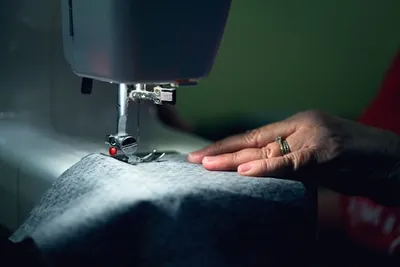
The tool list is short: a rotary cutter, cutting mat, acrylic ruler, fabric scissors, an iron, and a sewing machine with a basic straight-stitch foot. If you already sew, you own all of it, and the kit serves every project after. Our guide on how to sew a table runner covers the basic hemmed version and a reversible upgrade.
How To Make A Personalized Christmas Table Runner From Scratch?
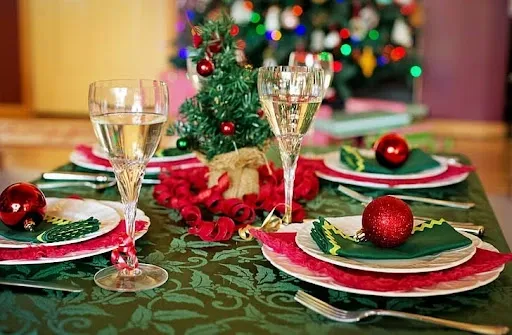
A personalized runner starts from scratch when you choose your own fabrics, cut to your table's measurements, and add a detail no store carries: a family name, a monogram, appliqued shapes, or a color mix from your dining room walls.
Personalization happens before sewing (fabric choice), during (a pieced monogram or applique), or after (embroidered text or iron-on transfers).
The simplest personal version is a two-fabric runner with a contrast binding in a third color. If sewing is not the plan, work with us to create custom embroidered table runners that carry your name or holiday message in raised, stitched thread.
How To Make A Xmas Table Runner That Matches Your Holiday Decor?
Match a Christmas runner to your decor by pulling two colors from the room and adding one accent. Look at the walls, chairs, or curtains, then choose fabrics in the same family instead of defaulting to red and green.
A color wheel keeps the pairing safe: analogous colors feel calm, complementary colors feel bold. A 2015 review of color and behavior research describes how color can shift mood depending on context, though it cautions the science is still young. Either way, the palette pulls real weight.
Before committing, buy a fat quarter of each fabric and check the mix at night under the fixtures that will light dinner. What looks perfect in daylight shifts under warm bulbs.
Want A Handmade-Look Christmas Runner Without The Sewing?
Our custom table runners print any holiday design you upload in 11 sizes, so your Christmas table gets a personal touch with no thread, no machine, and no minimum order.
What Is The Best Material To Make A Christmas Table Runner?
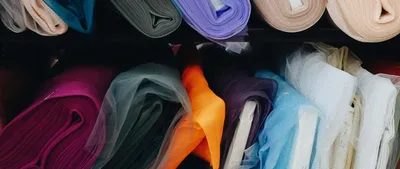
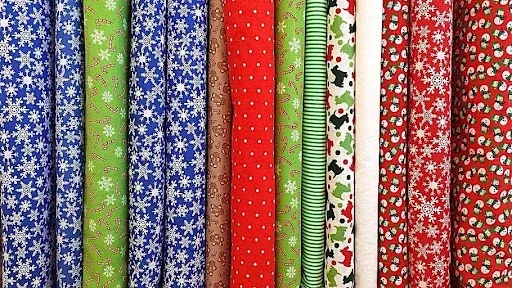
The best material for most Christmas runners is quilting-weight cotton or a cotton-polyester blend. We've made most of our holiday runners from one of these: cotton presses crisp, holds its shape, comes in hundreds of prints, and survives the washing machine after a gravy spill.
Four materials cover most holiday runners:
- Quilting cotton: the standard. Crisp, easy to cut, huge print selection, machine-washable.
- Cotton-polyester blend: adds wrinkle resistance and stain release, a little less crisp to press.
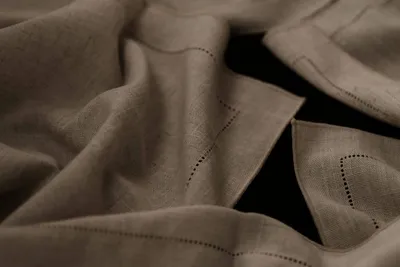
- Linen and linen-look fabrics: lovely drape and texture, but they wrinkle fast and shrink in hot water.
- Velvet and satin: rich under candlelight, but harder to sew accurately and limited to spot cleaning.
For a runner that lives on the table all December, washability matters more than luxury. Save velvet for a formal Christmas Eve piece. For a no-sew base in any shade, our custom printed tablecloths print any color under the runner.
Which Fabric Is Best For A Table Runner That Lasts For Years?
A tightly woven cotton or cotton-poly blend lasts longest because it resists pilling, holds dye through repeated washes, and does not stretch under serving dishes. Look for a fabric that lies flat without feeling flimsy.
Durability comes down to fiber twist and weave density, not price. A ten-dollar tight-weave cotton outlasts a twenty-dollar loose-weave linen. One honest caveat: even a durable fabric fades in strong light over a few seasons. Guidance from the National Park Service on textile object care is to roll flat textiles for storage rather than fold them, since fabric weakens along fold lines.
Prefer Stitched Detail Over Printed Patterns?
Our custom embroidered table runners add a raised, stitched texture that catches candlelight and gives the table a tactile, heirloom feel.
Learn moreWhat Supplies And Equipment Are Needed For A Quilted Christmas Table Runner?
A quilted Christmas runner needs fabric for the top, batting for the middle, backing fabric, thread, and basic cutting tools. Batting is the insulating middle layer: thin cotton keeps the runner flat for dishes, while thick polyester loft adds puff but lets glasses tip.
| Supply | Purpose | Beginner recommendation |
|---|---|---|
| Quilting cotton (2-3 prints) | Runner top | 1/2 yard each, pre-washed |
| Backing fabric | Runner underside | Same yardage as top, solid color |
| Cotton batting | Middle layer | Craft-size package, low loft |
| Rotary cutter and mat | Straight cuts | 45mm blade, 18x24 inch mat |
| Acrylic ruler | Measuring cuts | 6x24 inch quilting ruler |
| Thread | Piecing and quilting | 50-weight cotton, neutral |
| Sewing machine | Straight seams | Any machine, quarter-inch foot |
| Iron and board | Flat seams | Home iron, cotton setting |
Pre-wash every fabric before cutting. A 2012 study of fabric laundering found cotton shrinks most at the first wash and tapers off after, so if one fabric is washed and another is not, the finished runner puckers the first time you clean it.
What Quilted Table Runner Supplies Should Beginners Buy First?
Beginners should buy a rotary cutter, a self-healing mat, and one acrylic ruler first, because accurate cutting decides whether seams line up. Scissors work, but a rotary cutter through layers is faster and straighter.
After that, pick two coordinating Christmas fabrics and one solid, half a yard each, plus a craft-size piece of low-loft cotton batting. Thread should be a neutral color close to your darkest fabric so stitch lines vanish. Skip specialty tools on a first project: walking and free-motion feet earn their price later, but the standard quarter-inch foot handles a basic strip or checkerboard runner.
How Do You Sew A Christmas Table Runner Step-By-Step?
Sew a Christmas runner in six steps, from cutting the fabric to binding the edges.
- Measure and cut. Set your finished size (table length plus 12 to 24 inches, by about 14 inches wide), add a half-inch seam allowance, then cut the top fabrics into strips or squares.
- Piece the top. Sew the pieces with a quarter-inch seam, pressing each seam toward the darker fabric to cut bulk and stop show-through.
- Build the sandwich. Layer backing face down, batting in the middle, pieced top face up, then safety-pin baste every 4 to 6 inches so nothing shifts.
- Quilt the layers. Stitch in the ditch along the seams, or sew parallel lines about an inch apart - easiest for beginners.
- Square the edges. Trim all three layers flush with ruler and rotary cutter into a true rectangle.
- Bind the edges. Cut binding strips 2.5 inches wide, fold in half lengthwise, sew to the edge with a quarter-inch seam, then fold to the back and stitch down.
Press the finished runner one last time, which sets the edges into a flat, professional drape. For a reversible option, see our guide on how to make a table runner.
How Do You Create A Professional Looking Christmas Table Runner Finish?
A professional finish comes from three habits: consistent quarter-inch seams, pressed seams at every step, and squared corners. The drift we've seen most often comes from a seam allowance that creeps wider mid-panel, throwing blocks out of line so the runner pulls or waves.
Pressing is not ironing. Press straight down, lift, and move, rather than sliding the iron, which stretches bias edges and shifts seam lines.
Need A Printed Base Layer Under Your Runner?
Our custom printed tablecloths use dye sublimation with no color limits, so any Christmas palette or pattern you can imagine works as a coordinated base.
How To Decorate A Table Runner For Christmas Gatherings?
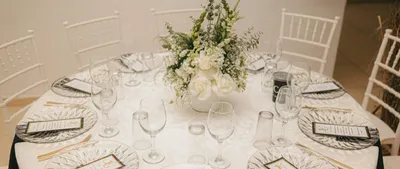
Decorate a Christmas runner by layering three things on top: greenery, light, and height. The runner is the colored spine, a pine or cedar garland runs down its center, battery candles add glow, and ornaments or pinecones fill the gaps.
Keep the centerpiece under 14 inches tall so guests can see each other across the table. A 2021 review of multisensory dining notes that even napkin color and a tablecloth shift how people experience a meal, so the runner's detail is doing real work. Table-setting research also found that tablecloth color and brightness can change the comfort and mood of a dining space.
Work from the center outward: tallest piece at the midpoint, stepping down toward each end. Odd-numbered groupings, like three candles or five pinecones, look composed; even rows look like a store shelf. Pair a textured runner with our custom Christmas tablecloths for a layered base.
How To Style A Table Runner For Christmas Tablescapes?
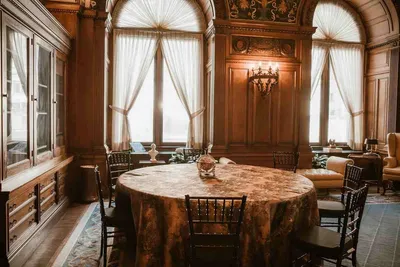
Style a Christmas tablescape by locking the runner's position first, then building outward. Center it on the long axis with equal overhang at both ends, or stop flush with the table edge for a modern look.
| Table length | Runner length, 6-inch drop | Edge-to-edge length |
|---|---|---|
| 48 inches (4 ft) | 60 inches | 48 inches |
| 72 inches (6 ft) | 84 inches | 72 inches |
| 96 inches (8 ft) | 108 inches | 96 inches |
Place settings sit on each side of the runner, not on top. Charger plates can overlap the edge by an inch or two, but dinner plates belong on bare table or tablecloth. Our table runner size chart covers widths and drop lengths for every standard table if you want exact numbers before you cut.
Dressing The Whole Table For Christmas Dinner?
Our custom Christmas tablecloths print holly, plaid, or solid designs in any colors you choose, cut for 4, 6, and 8 foot tables, giving your runner a festive foundation.
Get startedWhat Can You Use As A Table Runner For A Budget-Friendly Holiday Setup?
Almost any long textile works as a budget Christmas runner: a folded plaid throw, a strip of burlap off the bolt, wide Christmas ribbon in parallel lines, or a yard of holiday fabric with edges pressed under using iron-on hem tape. The press and straight placement matter more than a finished hem.
For casual tables, the improvised look adds charm: a folded flannel scarf under rustic plates still reads intentional. For formal tables, press every fold and center precisely, or the shortcut shows up in photos.
Repurposing fabric you already own keeps it out of the landfill and costs nothing, reason enough to shop your closet first. Our guide on how to decorate with table runners shows layering tricks for both store-bought and improvised runners.
How To Turn A Tablecloth Into A Runner For Christmas Decor?
Turn a tablecloth into a runner by folding it lengthwise into thirds or cutting a 14-inch-wide strip and finishing the raw edges with iron-on hem tape or a folded hem. A standard 60 by 84 inch tablecloth yields a runner about 84 inches long and 14 wide, fitting a 6-foot table with a 6-inch drop per end.
Choose a tablecloth with a pattern that works in a narrow strip. Plaids, stripes, and all-over prints translate well; large centered motifs lose focus once cut to runner width. The honest caveat is that cut edges fray if you skip the finish. Iron-on hem tape costs a few dollars and takes fifteen minutes.
What Is The Merry & Cheer Quilted Christmas Table Runner Pattern?
The Merry and Cheer quilted Christmas table runner pattern is a strip-pieced design that alternates holiday prints in repeating columns for a rhythmic, cheerful layout. The name comes from pairing a "Merry" print, often holly, with a "Cheer" print, often candy canes, in alternating strips.
It suits intermediate quilters because the build is entirely straight seams, yet looks more involved than a plain rectangle. Each strip is cut 2.5 to 3.5 inches wide, pieced into a panel, then layered with batting and backing.
The design adapts easily: swap in different prints and it still holds, making Merry and Cheer a reusable template, not a single recipe. Our 10-minute table runner method covers the fastest version.
How Does The Striped Merry & Cheer Table Runner Pattern Work?
The striped version works by cutting 6 to 10 equal-width strips, arranging them in a repeating color sequence, and sewing them edge to edge. The panel is then trimmed to size and quilted.
- Select fabrics. Pick 3 to 5 Christmas prints sharing one color, plus a solid for visual rest.
- Cut strips. Cut each fabric 2.5 or 3 inches wide by target length plus 1 inch for seams.
- Arrange the sequence. Alternate prints and solids, checking contrast from across the room.
- Sew and press. Join strips with a quarter-inch seam, pressing all seams one direction.
- Layer, quilt, and bind. Add batting and backing, quilt parallel to the strips or crosshatch, then bind all edges.
The striped layout is forgiving: every seam runs one way, so an off-width strip disappears into the rhythm. When you want the look but prefer to skip the machine, work with us to create custom table runners in any holiday design at competitive prices.
Frequently Asked Questions About How To Make A Christmas Table Runner
How To Make A Festive Christmas Table Runner At Home?
Make a festive Christmas runner at home by choosing 1 to 3 holiday fabrics in coordinating colors, cutting a rectangle to table length plus 12 to 24 inches, sewing a quarter-inch seam or using iron-on hem tape, and pressing it flat. Add a quilted middle layer for warmth and texture.
How To Sew A Customized Christmas Table Runner From Scratch?
Sew a customized Christmas runner by selecting fabrics that match your room's palette, cutting strips or squares to a pattern like checkerboard or Merry and Cheer, piecing the top with quarter-inch seams, layering with batting and backing, quilting with straight lines, and binding all edges for a clean finish.