

How To Use Table Runners And Placemats For A Beautifully Styled Table
A runner and placemats work when the sizes fit. The runner sets the center lane; the placemats define each guest's space. In this guide, we walk through the order of placement, the width math that decides whether a runner and a placemat fit side by side, the drop numbers for common table sizes, and how to coordinate colors.

Key Takeaways
- Lay the runner first, then set one placemat in front of each chair with about 24 in of edge per person, then plates, then glassware.
- Allow about 24 in of table edge per setting. A 13 × 19 in placemat at the edge overlaps a one-third-width runner by 3 in on a 30 in wide table and 1 in on a 36 in wide table.
- On a 72 in long table, a 72 in runner sits flush, an 84 in runner drops 6 in per end, and a 96 in runner drops 12 in per end. Choose runner width separately.
- We supply high-quality custom table runners printed to size in 11 stock lengths plus custom cuts, so the runner fits your table before the placemats join it.
Table of contents
-
How To Use Table Runners And Placemats?
-
Can You Use A Table Runner And Placemats Together?
-
What Is A Table Runner And Where Should You Place It?
-
Why Should You Use Placemats On A Dining Table?
-
How Should You Select The Right Table Runner And Placemats?
-
What Size Table Runner Should You Use?
-
How Should You Place A Table Runner?
-
Should Placemats Match The Table Runner?
How To Use Table Runners And Placemats?
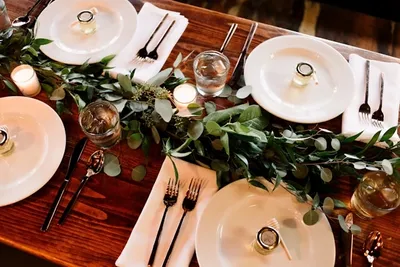
Set the table in this order. The runner is the center foundation; the placemats and dinnerware build outward from it.
- Prep the table. Wipe the surface, place any tablecloth first if you're layering.
- Measure the length and width. Note the number of chairs; keep 24 in per setting in mind.
- Lay the runner. Center it lengthwise; check the overhang is equal at both ends (6 to 12 in each end is standard).
- Set placemats. Align one in front of each chair, all at the same distance from the table edge.
- Add dinnerware. Center plates on the placemats; set cutlery and glassware around them.
- Add centerpiece and props. Keep them low enough to see over.
- Check from every seat. Sit at each chair; adjust anything that presses a knee or blocks a plate.
Keep enough space per setting so guests are not elbow-to-elbow, and enough exposed tabletop so plates never sit on runner edge.
How Should You Arrange Placemats And Dinnerware Around A Table Runner?
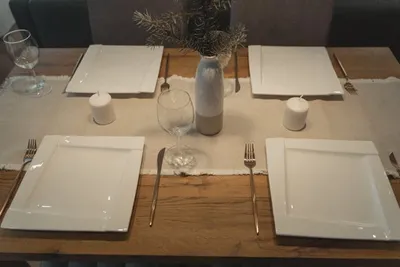
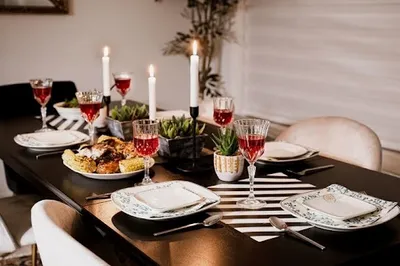
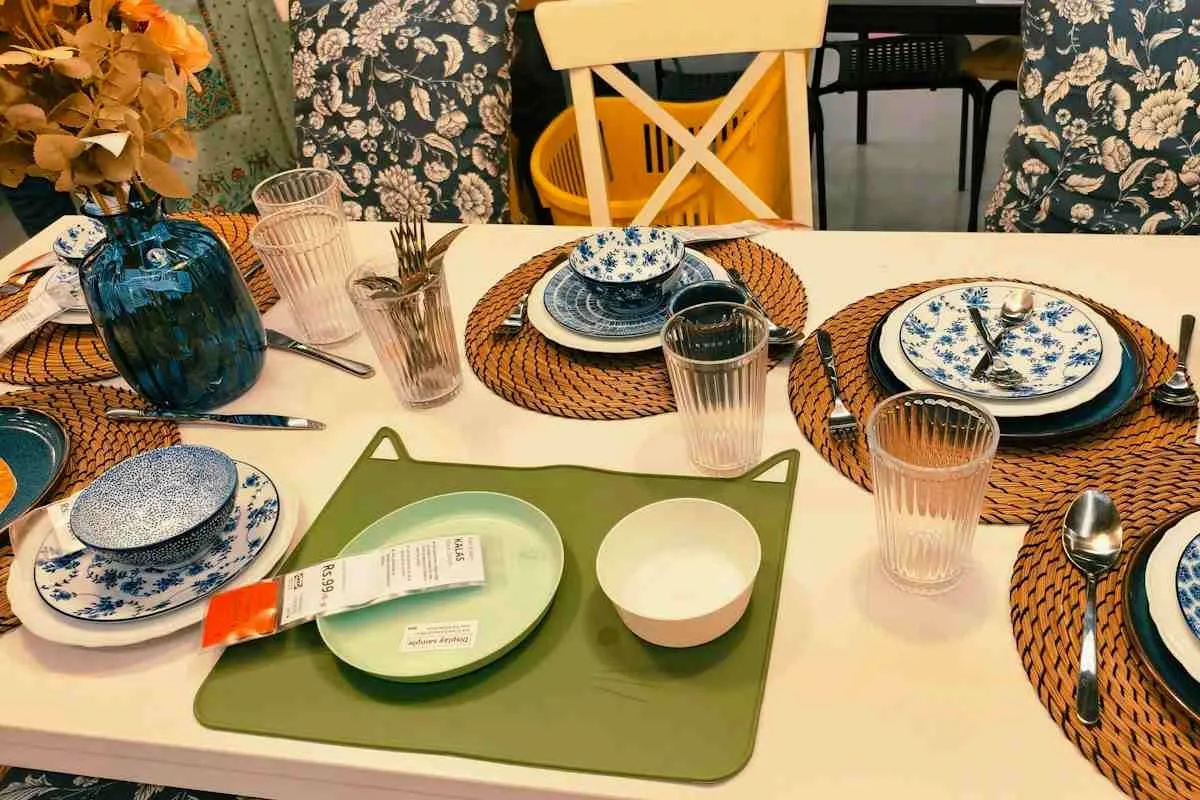
Place each mat directly in front of a chair, at a consistent distance from the edge. Center the dinner plate on the mat; arrange cutlery to the sides (fork left, knife and spoon right) and the water glass above the knife. Maintain enough space between neighboring settings so guests can lift a glass without touching a neighbor. Guidance from Ohio State University Extension puts place settings 1 1⁄2 in from the table edge for formal settings. Check the arrangement from each seat before service, because a setting that looks fine from the head reads crowded from the side.
Can You Use A Table Runner And Placemats Together?
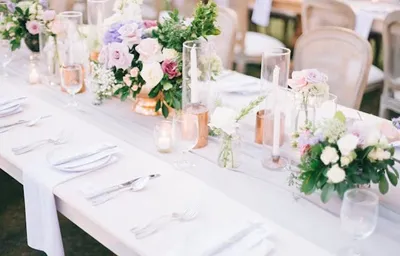
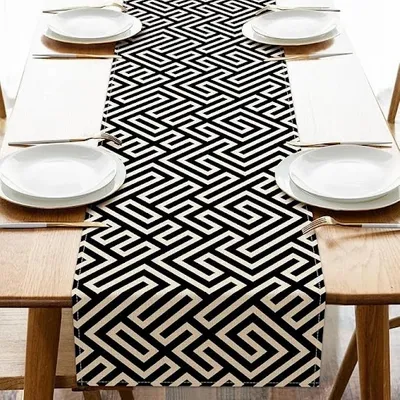
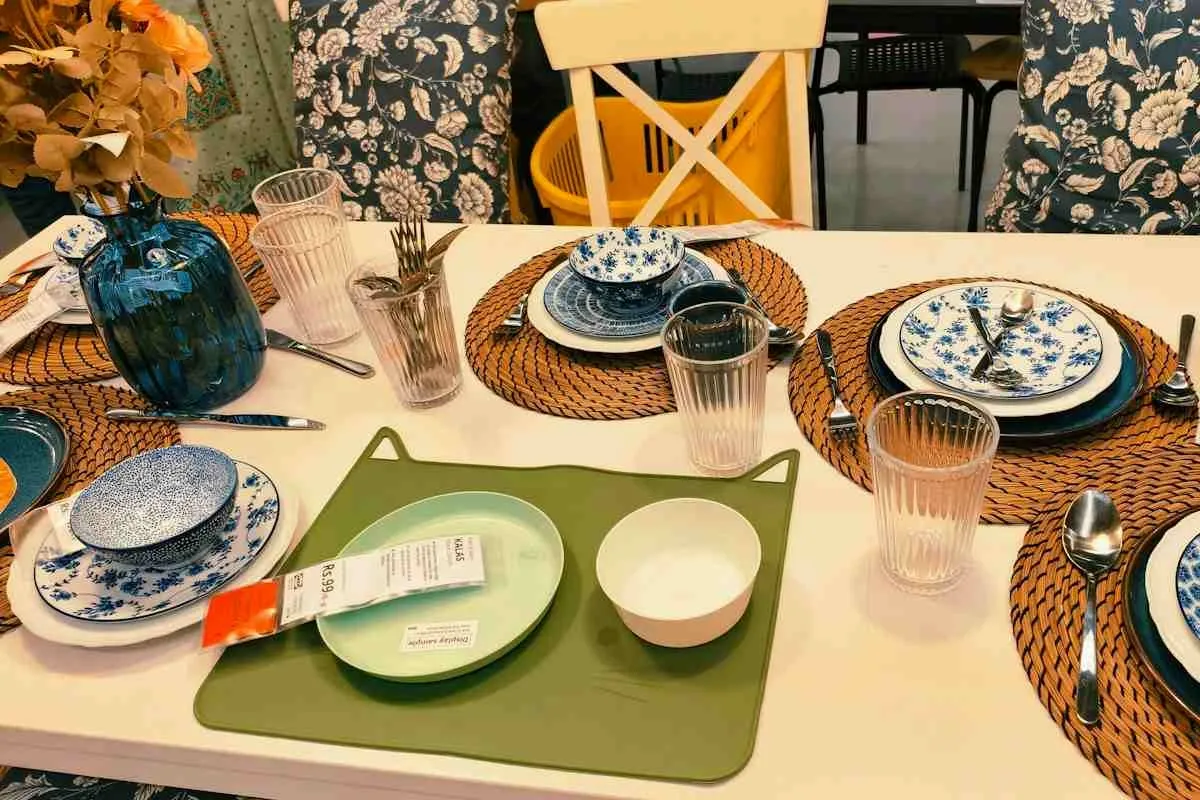
Yes. Runners and placemats layer well because they do different jobs: the runner defines the center lane, the placemats define each guest's space. The combination works for everyday meals, formal dinners, holidays and events. Work with us on a custom print table runner that carries your color or motif down the center, then choose placemats in a plainer version of the same palette so the two pieces read as coordinated rather than competing.
How Can You Layer A Table Runner And Placemats Without Overcrowding The Table?
Pick one visually dominant pattern or texture. If the runner is patterned, the placemats stay plain; if the placemats are patterned, the runner stays solid. Keep enough space around each setting for a plate, glass and cutlery to sit without touching the runner. On narrow tables (30 in and under) a slight placemat-on-runner overlap can work if both are lightweight and similar in color. Avoid stacking too many decorative layers, because each one takes usable dining space away from the plate.
Want Your Table Runner Sized To Your Actual Table?
Our custom table runners come in 11 stock sizes plus custom lengths, so a 60 in or 72 in dining table gets the exact overhang you want.
What Is A Table Runner And Where Should You Place It?
A table runner is a long, narrow cloth laid down the center of a table, usually with 6 to 12 in hanging past each end. It runs lengthwise on rectangle tables and across the diameter on rounds. The traditional placement is centered and lengthwise; alternative arrangements include widthwise across a wide table, or short and centered inside the tabletop for a modern look. A runner acts as both decoration and a light layer of protection for the center of the table.
What Are The Main Benefits Of Using A Table Runner?
A runner turns a plain table into a set piece. It changes the mood of a room quickly, which is why hosts swap runners for seasons, holidays and themes. It protects the center of the table from small spills, scratches from serving pieces and marks from suitable warm objects on a trivet. It uses less fabric than a full cloth, which means less to wash, less to iron, less to store. A 2019 study of 247 restaurant diners published in *Food Quality and Preference* reported that about three quarters of participants rated linen as an important part of the dining experience, and fabric linen raised preference for the appetizer specifically. On the sizing runners we ship most often, hosts trade a bulky tablecloth for a runner over bare wood the moment the finish is presentable. We've found the swap sticks because the runner takes a quarter of the laundry.
Determine The Right Table Runner Size for Use with Placemats
Enter your table dimensions and desired drop to get the exact tablecloth size you need.
width + drop (×2) = total width
length + drop (×2) = total length
diameter + drop (×2 for both sides) = total diameter
Printing A Runner To Match A Theme?
Our custom print table runners carry any pattern, monogram or motif down the center, with a free digital proof so what you approve is what we print.
Learn moreWhy Should You Use Placemats On A Dining Table?
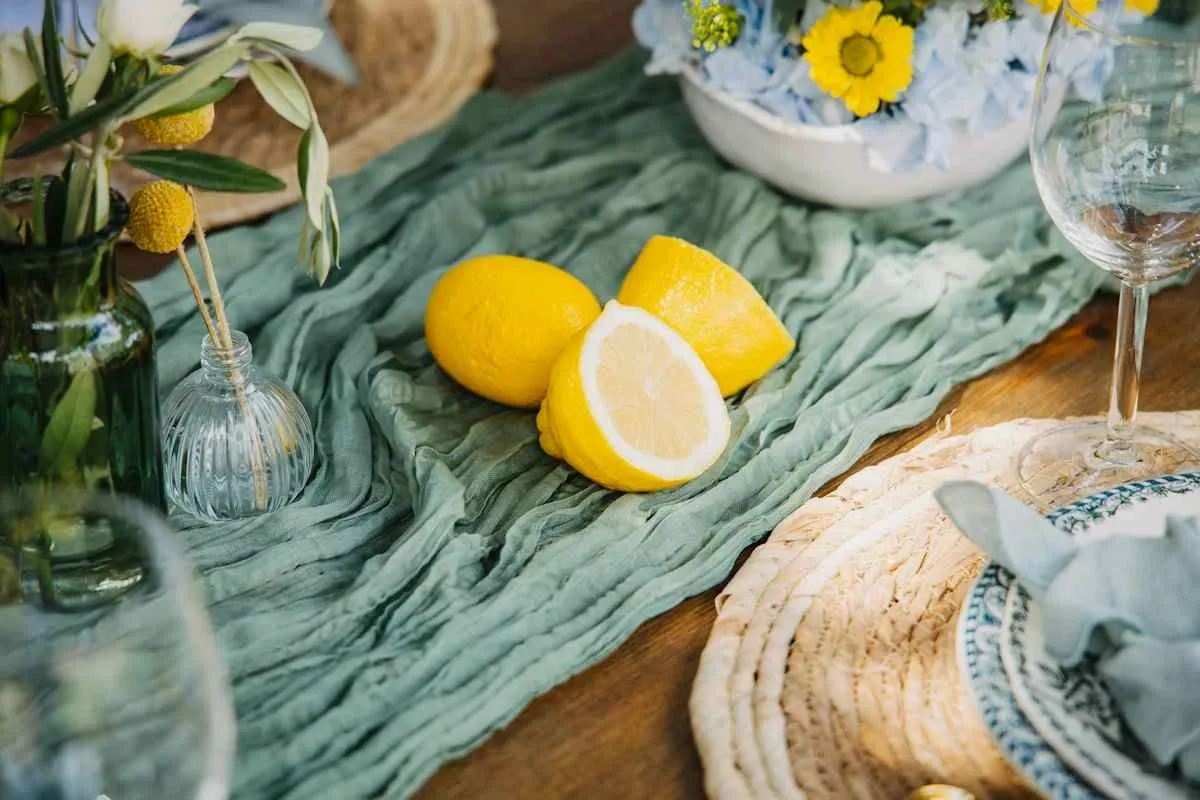
Placemats define individual dining areas. Each guest gets a marked space that holds the plate, glass and cutlery. Placemats protect the tabletop from spills, stains and heat from suitable objects, and they provide a stable surface for glassware. Their color, shape and texture add layered visual interest that a bare table cannot. Guidance from Canadian Conservation Institute Notes 7/2 on furniture finishes reports that water on natural resin finishes causes rapid, obvious damage, which is why any bare-wood table dining benefits from placemats even in the absence of hot dishes. On the event tables we dress, three settings a side is the limit once each guest gets 24 in; a fourth placemat means elbows and reaches across the runner. Our guide to using placemats with tablecloths and covers covers the layering variants.
What Are The Basics Of Using Placemats?
Set one mat directly in front of each chair, aligned consistently around the table. Formal settings sit flush to the table edge or ½ in inside; casual settings sit 1 to 1 1⁄2 in inside the edge. Guidance from Oregon State University Extension 4-H sets a 24 in wide by 15 in deep space per setting and puts placemats flush to the edge or a half inch inside. Make sure each mat accommodates the essential dinnerware without crowding neighboring settings. Spacing can be relaxed slightly for a casual meal or tightened for formal service. On a 72 in table, three 13 in wide placemats a side is comfortable at the Extension 20 to 24 in per cover; four mats a side means elbows.
How Should You Select The Right Table Runner And Placemats?
Base the selection on the table's dimensions, shape, material, color and intended use. A 72 in dining table needs different pieces from a 96 in banquet table. Everyday dining calls for machine-washable materials; formal or seasonal displays can carry heavier fabrics that need care. Consider whether the setting is inside, outdoors, casual, black-tie or seasonal. Pieces should support the table, not hide or overwhelm it. Our dining table runner size chart guide breaks the sizing math down by table length.
How Do You Balance Style And Practicality When Choosing Table Linens?
Match the material to how often the table is used. Everyday tables need stain resistance and easy washing (polyester, cotton blends); occasional-use pieces can be heavier fabrics or handwash-only styles. Simple designs are usually more versatile: a solid runner and neutral placemats work across seasons; heavily themed pieces suit a single occasion. Storage matters too. Guidance from the NPS Museum Handbook Appendix K states that textiles "tend to break along fold-lines", so we roll our runners and store placemats flat rather than folded into hard creases. Reusable pieces earn their keep: a set that survives twelve dinners costs less per meal than a themed set that goes to storage after one holiday. Ask, before buying, whether the pattern will still read as intentional two years from now.
Dressing Rectangle Dining Tables Beneath The Runner?
Our custom rectangle tablecloths cover the base layer in the drop you want, sized for standard 6 ft and 8 ft dining tables.
What Size Table Runner Should You Use?
Runner size follows the table's actual dimensions, not the seat count. Width sits at about one-third of the table width; length depends on the overhang you want. Traditional overhanging runners drape 6 to 12 in past each end; shorter contemporary runners stay flush or extend a token 2 to 3 in.
Check whether the placemats overlap:
Gap = (table width − runner width) ÷ 2 − placemat depth + distance the mat sits in from the table edge
A negative result means overlap. For a 13 × 19 in placemat with its 19 in side along the table edge, the depth is 13 in.
| Table width | Runner width (about one-third) | Gap with a 13 in deep mat at the edge |
|---|---|---|
| 30 in | 10 in | −3 in: overlaps |
| 36 in | 12 in | −1 in: overlaps |
| 42 in | 14 in | 1 in: clear |
Moving a placemat inward moves its inner edge toward the runner, so it reduces the gap by 1 inch; the article currently says it adds 1 inch.
Use gap = (table width − runner width) ÷ 2 − placemat depth − distance inset.
On the 30-inch table, a 1-inch inset changes the 3-inch overlap to 4 inches.
Choose length separately: runner length = table length + 2 × desired drop
| Table length | Flush | 6 in drop per end | 12 in drop per end |
|---|---|---|---|
| 60 in | 60 in | 72 in | 84 in |
| 72 in | 72 in | 84 in | 96 in |
| 96 in | 96 in | 108 in | 120 in |
How Far Should A Table Runner Hang Over The Ends?
An overhang of 6 to 12 in (15 to 30 cm) each end is the conventional look. Both ends should have an equal drop. Shorter contemporary runners stay flush or extend 2 to 3 in past the edge for compact or modern settings. A trade-show table typically uses no overhang so the printed logo on the front panel is not folded down. On a 72 in table, a 72 in runner sits flush, an 84 in runner drops 6 in at each end, and a 96 in runner drops 12 in. Choose flush for a compact look, 6 in for a modest drape, or 12 in for a longer drape.
Setting Twenty Or More Tables For An Event?
Our custom bulk table runners keep per-unit costs down for weddings, galas and corporate events, with the same free digital proof at any quantity.
Get startedHow Should You Place A Table Runner?
The four common placements are lengthwise (centered along the table's long axis), short and centered (framing a centerpiece without full-length coverage), widthwise (across the width, connecting opposing settings), and diagonal or crossed on rounds. Placement should complement the table's shape, seat count and formality. Check that the runner does not obstruct dinnerware or serving areas. On a 96 in banquet table with four settings a side, a lengthwise runner works; on a small 42 in square dinner table with 2 diners, a widthwise runner across two settings reads as more balanced. The runner we're asked to reprint most often was stored folded in a bin between events; the crease never fully left, so we roll ours instead.
What Table Runner Placement Works Best For Different Table Settings?
Use lengthwise placement for a traditional central focal line. A short centered runner frames a large centerpiece without the full drape. Widthwise runners connect opposing place settings on a wide table and work well on square tables set for four. Match placement to shape, seating and available space. Our guide to setting a table with a runner and placemats covers additional layout variants for holiday and seasonal settings. On round tables the runner runs across the diameter or in a crossed X; on oval tables lengthwise stays the safer default. Test the placement once with plates and glassware laid out, then step back to check whether the runner reads as one visual line or breaks into two halves.
Should Placemats Match The Table Runner?
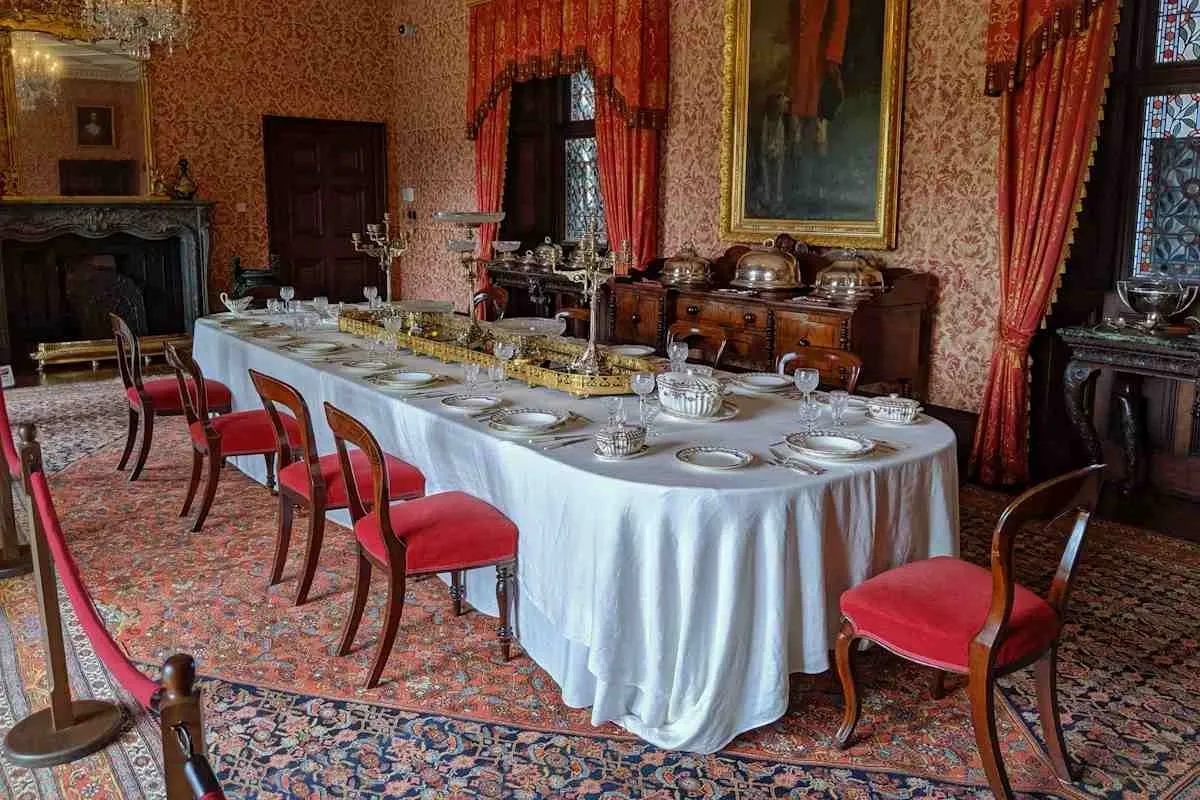
No, but they should share a visual connection. Exact matching often reads as costume rather than composition. Coordinate through color families, materials, patterns or level of formality. A linen runner pairs with linen napkins even if the placemats are cork or bamboo. Intentional contrast can work as well as close matching: a bold patterned runner with plain white placemats, or a plain neutral runner with printed placemats. The runner is decoration, not a trivet; keep a proper trivet under hot dishes. We don't sell placemats, so the placemat advice above is what we've learned setting event tables next to the runners and covers we do make. A useful test: photograph the table on a phone. If the layers read as one composition on the small screen, they read at eye level too. If two elements fight, one of them is doing too much.
How Can You Coordinate Table Runners, Placemats And Dinnerware?
Pair patterned pieces with quieter companions. If the runner is patterned, dishes and placemats stay simple; if the dishes are patterned, the runner and placemats stay plain. Repeat one or two colors across all three layers to tie the set together. Research on plate color, including a 2013 study in Flavour with 253 participants, suggests plate color influences how food is perceived, so pick dishes for both look and mood. Avoid making every element identical, because controlled variation adds depth.
Now, here is a quick pick for your table's runner and placemat set.
Frequently Asked Questions About How To Use Table Runners And Placemats
How Should You Use Table Runners And Placemats?
Lay the runner first, centered along the table's length, then set one placemat in front of each chair with about 24 in of edge per person, then plates, cutlery and glassware. Use one dominant pattern; keep enough tabletop clear for full settings.
Can Table Runners And Placemats Be Used Together?
Yes. The runner defines the central lane and the placemats mark each guest's space. Use one dominant pattern, coordinate colors across both pieces, and check that a 13 × 19 placemat and a 24 in runner leave room on your table width.