

Layering Tablecloths: How Can You Create A Complete Tablescape?
One tablecloth covers a table. It rarely makes anyone look twice. The tables that get photographed at weddings and dinners are so often built in layers, and the technique is easier than it looks. In this guide, we break down layering tablecloths into steps, sizes, and combinations that actually work.


Key Takeaways
- Layering means stacking a base cloth with an overlay, runner, or placemats so the table gains texture, color, and depth instead of one flat surface.
- Every layer must stay partly visible. Size differences between layers are what make the technique read as intentional.
- The practical order: base cloth, overlay or runner, placemats, dinnerware, napkins, accents - built from the bottom up.
- We supply high-quality custom tablecloths, runners, and overlays in any size, color, and printed design at competitive prices, so every layer can match on purpose.
Table of contents
-
What Is Layering Tablecloths?
-
How Do You Build A Layered Tablecloth Arrangement?
-
How Can You Combine Different Sizes, Patterns, And Colors When Layering Tablecloths?
-
How Should You Layer Tablecloths On Different Table Shapes?
-
How Can You Create Modern And Creative Layered Tablecloth Designs?
-
What Common Layering Tablecloth Mistakes Should You Avoid?
-
How Can You Adapt Layering Tablecloths For Different Occasions?
-
How Can You Keep Layered Tablecloths Stylish And Functional?
What Is Layering Tablecloths?
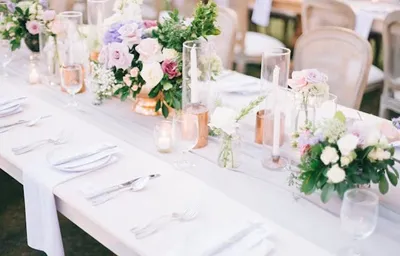
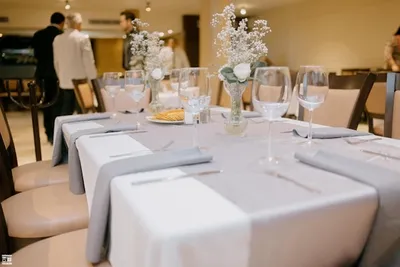
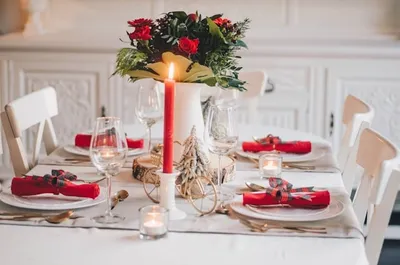
Layering tablecloths is combining a base cloth with a smaller overlay, runner, placemats, or other coordinating linens on the same table. The base covers; the upper layers decorate.
Each added layer introduces texture, color, pattern, contrast, and visual depth that a single cloth cannot. The result reads as richer and more deliberately styled - the difference between a covered table and a set one.
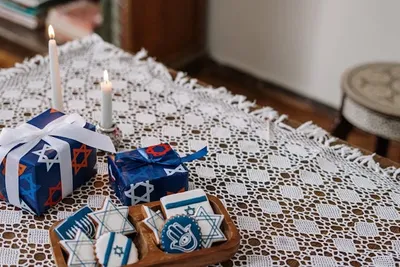
The technique scales to the occasion: everyday dinners, holidays, weddings, parties, and formal events all use the same structure with different fabrics. A kitchen table might layer a runner over a plain cloth; a reception table might stack three coordinated pieces. Our guide to what a table runner is covers the most common second layer in detail.
How Do You Layer Table Linens For A Complete Tablescape?
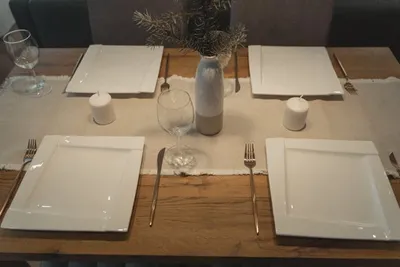
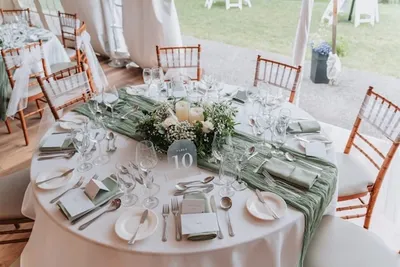
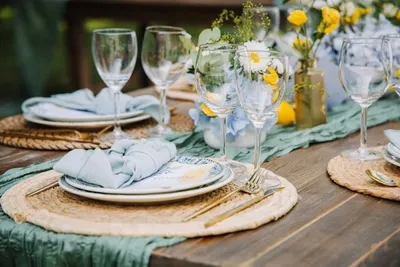
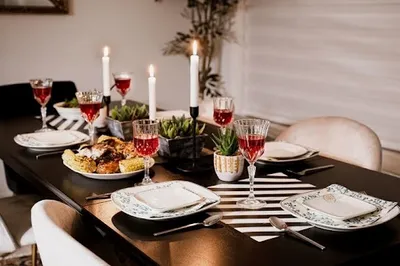
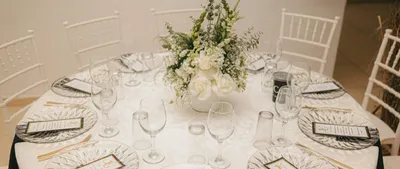
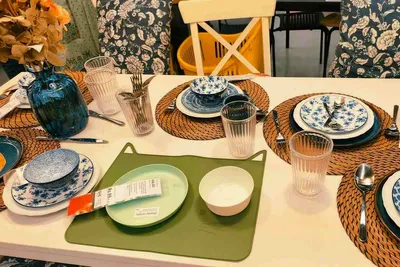
Build in this order: base cloth, overlay or runner, placemats, dinnerware, napkins, then decorative accents. Bottom to top, largest to smallest.
Each new layer should add interest without burying the layer beneath it - if the overlay hides the base completely, the base was wasted. A study from 2018 found the surface texture participants touched while tasting changed how sweet and pleasant they rated a wine, so the fabrics guests actually touch are doing more work than pure decoration.
Before adding the final accents, walk around the table and check every side. And leave working room: guests need open space for elbows, glasses, and passing dishes, or the prettiest tablescape fails at dinner.
How Do You Build A Layered Tablecloth Arrangement?
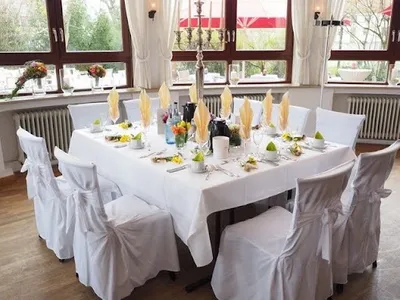
Start with a full-size cloth as the foundation, then position a smaller cloth over it as the decorative top layer. That two-cloth stack is the core move every other variation builds on.
Size difference is the rule that makes it work: choose cloths different enough in size that the lower cloth stays clearly visible - as a starting point, we aim for a band of 8 to 12 inches of exposed base on a standard dining table, scaled up or down with the table itself.
Placement sets the style. Center both cloths for a traditional, symmetrical look, or offset or angle the top cloth for a more contemporary one. For pattern, pair a solid base with a patterned top, or reverse it when the lower pattern is subtle enough not to fight. We print both halves of that pairing - the base through our custom rectangle tablecloths and the top through any overlay size you specify.
How Do You Layer Two Tablecloths?
Foundation first, decoration second. Smooth the full-size cloth so the drop hangs even, then center or offset the smaller cloth on top.
Check the visibility rule before styling anything: from a seated position, both cloths should be obvious. If the top cloth reaches past the table edge on all sides, it is a second base, not a layer.
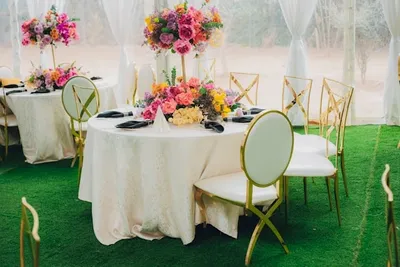
A square top cloth on a round base is the classic wedding version - the corners hang in four even points over the circular drop. A study from 2019 found a fabric's drape coefficient, the shape it takes hanging over an object, varies widely between fabric types, so pair a structured base with a softer top layer if you want the points to fall gracefully. In our experience, that one combination outnumbers every other two-cloth pairing at receptions.

Want a layered table that starts with the right base?
Work with us to create custom rectangle tablecloths in the exact size and shade your layered design needs as its foundation.
How Can You Combine Different Sizes, Patterns, And Colors When Layering Tablecloths?
Size gaps first, then pattern discipline, then color logic - handle the three decisions in that order and the table coordinates itself.
Size differences keep every layer visible, which is the point of layering at all. For pattern, pair large-scale prints with solids or subtle textures, never two competing designs - one voice speaks, the others hum.
Color has two working modes. Shared undertones (warm with warm, cool with cool) produce a coordinated, calm table. Deliberate contrast - navy over crisp white, rust over cream - defines each layer sharply and reads more dramatic. Both work; mixing the two strategies on one table usually doesn't.
How Can You Create A Balanced Layered Table Design?
Limit the table to one bold pattern. Everything else supports it in solids, tone-on-tone weaves, or texture.
Coordinate color across linens and decor by repeating each chosen shade at least twice - runner and napkins, overlay and candles - so nothing looks orphaned. Research from 2019 examined table linen as an ambient factor in how diners experience a meal, and balance is what that ambient layer either delivers or ruins.
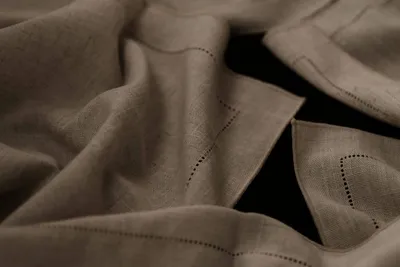
Use texture for depth where color must stay quiet: a woven runner over smooth polyester adds interest to even an all-white table.
Looking for a runner that ties your whole tablescape together?
Our custom table runners come in eleven sizes and any printed design, giving your layered table its finishing accent at a competitive price.
Learn moreHow Should You Layer Tablecloths On Different Table Shapes?
Follow the table's own geometry. Layers should echo the shape underneath, not fight it.
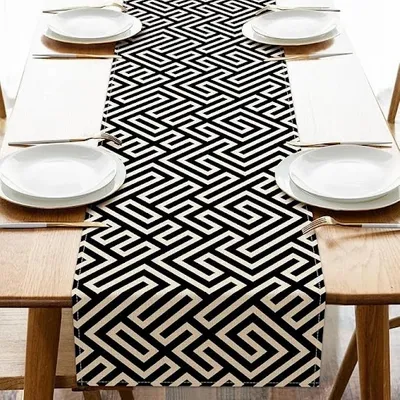
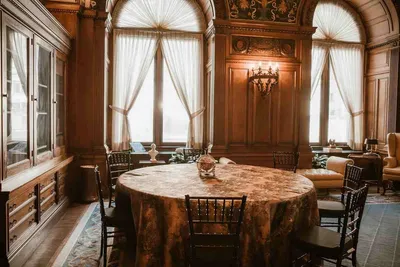
On round tables, a square overlay or floor-length base keeps the circle readable; runners work best in a cross of two. On oval tables, run the runner down the long axis and keep overlays soft-edged. Square tables take diagonal overlays beautifully. Rectangles carry the classic lengthwise runner, or two or three widthwise runners acting as shared placemats.
| Table shape | Best second layer | Placement tip |
|---|---|---|
| Round | Square overlay | Center for even corner points |
| Oval | Lengthwise runner | Follow the long axis |
| Square | Square overlay | Rotate 45 degrees for a diamond |
| Rectangle | Runner or widthwise runners | Center line, or one per pair of seats |
Overlay placement follows the same logic: centered preserves the shape, angled energizes it. Whatever the shape, keep the base cloth's drop even all around - an uneven bottom layer undermines everything stacked above it, a fit problem our custom fitted table covers remove entirely.
Which Layering Style Works Best For Your Table Shape?
Centered overlays suit formal settings and symmetrical rooms; diagonal overlays suit casual and modern ones. Start there and adjust by eye.
Keep the layers proportional: an overlay should cover roughly one-third to two-thirds of the tabletop. Smaller looks like a lost napkin; larger swallows the base. On rectangles, the same fraction applies to runner length: let the runner either stop 6 inches from each edge or hang past it by 6 to 10 inches, never dead level with the edge.
Measure before you buy - the right overlay size comes from the tabletop dimensions, not the base cloth's. A 60-inch round table pairs naturally with a 45 to 54-inch square overlay for exactly that proportion.
Before choosing your layers, measure the tabletop and decide how far you want the base cloth to hang. Calculate the required cloth size using:
Cloth length = table length + (2 × desired drop)
Cloth width = table width + (2 × desired drop)For a round table: cloth diameter = table diameter + (2 × desired drop).
Once you know your table dimensions and desired drop, use the chart below as a starting point for choosing a base cloth, second layer and runner.
| Table size | Suggested base cloth | Approximate base drop | Suggested second layer | Suggested runner width |
|---|---|---|---|---|
| 36-inch round | 70-inch round | 17 inches | 30–36-inch square overlay | 10–12 inches |
| 48-inch round | 90-inch round | 21 inches | 36–48-inch square overlay | 12–14 inches |
| 60-inch round | 120-inch round | 30 inches | 45–54-inch square overlay | 14–18 inches |
| 72-inch round | 132-inch round | 30 inches | 54–72-inch square overlay | 18–24 inches |
| 30 × 72-inch rectangle | 60 × 102-inch rectangle | 15 inches | 24–30-inch-wide runner | 10–14 inches |
| 30 × 96-inch rectangle | 60 × 126-inch rectangle | 15 inches | 24–30-inch-wide runner | 10–14 inches |
How Can You Create Modern And Creative Layered Tablecloth Designs?
Symmetry is one style choice, not a requirement. Modern layered tables lean on asymmetry as confidently as traditional ones lean on centering.
The classic arrangement centers every layer. Contemporary versions angle the overlay 45 degrees, offset the runner toward one side, or run two narrow runners in parallel instead of one wide one. A cloth deliberately draped longer on one side, weighted and pressed, reads as styled rather than sloppy - the difference is crisp edges.
Traditional styling suits formal dinners and classic venues; contemporary styling suits lofts, showers, and brand events. Match the approach to the room, then commit to it on every table in sight.
How Can You Make Layered Tablecloths Look More Dynamic?
Give the table one focal point and let the layers point at it. An off-center centerpiece with the runner offset the opposite way balances the composition without symmetry.
In asymmetrical layouts, balance comes from visual weight, not mirroring - a bold color block on one side against grouped candles on the other. Keep breathing room between elements; crowding kills the effect faster than any color clash.
Then repeat colors and textures at least twice across the table so the asymmetry still reads as one design. One repetition is coincidence; two is a scheme. Metallic accents count as a color here, so a gold-threaded runner wants gold repeated in candle holders or napkin rings.

Need overlay cloths with a pattern nobody else has?
Order custom printed tablecloths with your own design or colors, so the top layer of your table is genuinely one of a kind.
What Common Layering Tablecloth Mistakes Should You Avoid?
Overcrowding is mistake number one. When cloths, runners, placemats, and decor all compete, guests get no room and the design gets no air.
The rest of the shortlist: uneven drops on the base cloth, too many patterns fighting for attention, and bad proportions - overlays nearly as large as the base, or runners too narrow for the table width. A runner should span roughly one-third of the table's width.
Slipping is the sneakiest one - we've seen a perfectly set overlay rotate a quarter turn during a single dinner service. Fabric on fabric slides, so layered tables shift as guests sit and serve. Fix misalignment the moment you spot it: re-square the overlay to the table's centerline rather than nudging edges, which compounds the drift.
How Can You Keep Layered Tablecloths Secure And Properly Aligned?
Non-slip pads between layers hold most reliably in our experience, followed by discreet tablecloth clips at the rim and rubber grippers at the corners.
Cut the pad an inch smaller than the top layer on every side so it never peeks out. Pads suit permanent setups like restaurants; clips suit outdoor events where wind joins the fight; grippers suit slick spandex-on-polyester stacks. Align by matching the overlay's corners or centerline to fixed points on the base pattern.
Protect delicate top layers by keeping clips off embroidered or satin edges - clip the base cloth instead. Fine fabrics mark easily, and clip dents in satin outlast the event.
Layering round tables for a wedding or event hall?
Choose custom round tablecloths in coordinated shades and bulk quantities, and every layered table in the room matches perfectly.
Get startedHow Can You Adapt Layering Tablecloths For Different Occasions?
Change the accent layer, keep the base. That is the entire seasonal strategy, and it is why layering is cheaper than it looks.
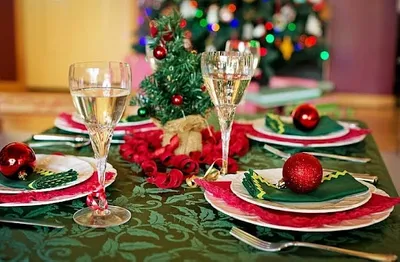
A neutral base cloth serves year-round while seasonal runners and overlays rotate over it: warm plaids in winter, florals in spring, deep jewel tones for holidays, school or team colors for fundraisers. Weddings push the formula formal - floor-length base, sheer or satin overlay. Outdoor events push it practical.
For outdoors, choose the base in weather-tolerant, washable fabric and save delicate layers for indoors. Research from 2022 found fabric shrinkage climbs with repeated wash cycles, so hard-working outdoor bases belong in dimensionally stable polyester, not cotton that washes itself smaller. Work with us to build the rotation: one base plus three seasonal custom table runners re-dresses a table all year.
Which Layered Tablecloth Ideas Work Best For Seasonal And Outdoor Settings?
Polyester bases with rotating runners win outdoors. They tolerate weather, wash easily, and hold their size.
Seasonal swaps stay simple: a burlap-look runner for fall, a crisp white overlay for summer, plaid for winter holidays - each stored flat in a drawer in under two minutes. Anchor everything against wind with clips or weights before decorating, and clip the layers together as one stack rather than each cloth separately, or the wind finds the gap between them.
Balance decoration with practicality: outdoors, every extra layer is one more thing the weather can move, so two layers plus weights beats four layers of trouble.
How Can You Keep Layered Tablecloths Stylish And Functional?
Design around the plates, not despite them. A layered table still has to feed people comfortably.
Keep runners and overlays clear of the place-setting zone - a design reference on table settings gives each diner a roughly 24-inch-wide space, and layers that intrude on it get shoved aside by the first course. Reserve the center-line for serving dishes on trivets, and keep tall decor below eye level so guests can still see each other across the table.
Long-term, care keeps the system working: wash layers by fabric type, not as one load, and press before storing. One honest caveat - layered tables take longer to reset after meals, so save the full stack for occasions and run base-plus-runner on ordinary nights.
How Can You Maintain A Beautiful Yet Practical Tablescape?
Decorate the spaces between place settings, never the settings themselves. Candles, florals, and accents live on the runner line and the gaps.
Keep fabric out of the way of dining: overlay points should hang at the table's edge zones, not over laps, and runner ends should stop short of end-seat plates or hang cleanly past them.
Store layered linens rolled rather than folded where you can - rolling prevents the sharp creases that show worst on an overlay displayed flat. Our guide on decorating with runners carries the styling side further.

Frequently Asked Questions About Layering Tablecloths
What Does Layering Tablecloths Mean?
Layering tablecloths means stacking a base cloth with smaller linens - an overlay, runner, or placemats - so the table gains texture, color, and depth instead of one flat surface.
What Is The Best Way To Layer Tablecloths?
Build bottom to top: full base cloth, smaller overlay or runner, placemats, dinnerware, then accents. Keep every layer partly visible and leave guests room to dine.