

Twisted Pole Table Runner Pattern: How To Sew A Stunning Quilted Table Runner Step By Step
A twisted pole table runner looks like ribbon spiraling down your table, so most beginners assume it needs curved seams. It does not - the whole twist is built from plain squares and triangles. In this guide, we break down the twisted pole table runner pattern, the supplies it needs, the sizing math, and the shortcuts we trust.
Key Takeaways
- The twist is an illusion. Half square triangles and solid squares, sewn with straight quarter-inch seams, make two fabrics appear to wrap around each other.
- It suits beginners. If you can cut accurately and sew a straight seam, you can finish a runner in a weekend, with free patterns to walk you through.
- Size it to your table. Most runners measure 12 to 18 inches wide, and a 72-inch table wants an 84 to 96 inch runner for a 6 to 12 inch drop on each end.
- We supply high-quality custom table runners you can personalize with any size, color, and printed design at a great price, with generous bulk discounts on larger orders.
Table of contents
-
Twisted Pole Table Runner Pattern
-
How To Make A Twisted Pole Table Runner?
-
What Fabrics And Tools Are Needed For A Pole Twist Table Runner Quilt Pattern?
-
What Quilt Block Patterns Work Best For Twisted Pole Designs?
-
Which Free Twisted Table Runner Patterns Are Best For Beginners?
-
How Can You Use Twisted Ribbon And Christmas Table Runner Variations?
-
Why Are Christmas Twisted Pole Table Runner Designs So Popular?
-
What Size Should A Quilted Table Runner Be?
Twisted Pole Table Runner Pattern
A twisted pole table runner pattern is a quilt pattern that arranges half square triangles (two triangles joined on the diagonal) so two contrasting fabrics appear to spiral around each other like ribbon wrapped on a pole. Every seam is straight; the twist happens entirely in the layout.
Quilters love it because the payoff outpaces the effort. The diagonal seams connect from block to block, so the eye reads continuous movement where there are only simple squares. The effect makes the runner look advanced even when a beginner sewed it.
The design works year-round in two everyday fabrics, and it has become a holiday favorite - red and green pole twists show up on Christmas tables everywhere.
Why Make A Twisted Pole Table Runner?
Make one because it delivers a handmade centerpiece for about a yard and a half of fabric, and teaches real quilting skills at a small, forgiving scale.
- Decor value: a quilted runner softens a bare table and anchors a centerpiece.
- Skill practice: you learn rotary cutting, half square triangles, chain piecing, and binding.
- Speed and cost: a weekend and two half-yard cuts plus backing gets it done.
- Gifting: small enough to mail, personal enough to keep.
A 2012 study on quilting and wellbeing in the Journal of Public Health found quilters described the craft as focused and uplifting, with color itself reported as psychologically uplifting. Browse a few table runner ideas first so you pick a layout you will actually use.
How To Make A Twisted Pole Table Runner?
We’ve summarized the full process in a 10-point bullet list:
- 1. Prepare: Prewash if required, press the fabrics, and cut all squares, border strips, backing, batting, and binding.
- 2. Pair: Match five A squares with five B squares and ten A squares with ten C squares, right sides together.
- 3. Mark: Draw one diagonal line across the wrong side of each lighter square.
- 4. Sew: Stitch ¼ inch from both sides of every marked line, cut along the line, open, and press.
- 5. Trim: Square all 30 half-square triangles to exactly 4½ inches.
- 6. Arrange: Lay out three units across and ten rows long, rotating the triangles until Fabric A appears to wrap around Fabric B against Background C.
- 7. Check: Photograph the full arrangement and confirm that every diagonal connects before moving any units.
- 8. Piece: Sew each row with ¼-inch seams, alternate pressing directions, and join the ten rows.
- 9. Finish the top: Measure the center, attach 2-inch side and end borders, and press the runner flat.
- 10. Complete: Layer with backing and batting, baste, quilt along the diagonals, trim, and attach the binding.
Plan on 4 to 6 hours of sewing for a confident beginner, spread over a weekend. The skills are basic: a consistent quarter-inch seam, careful pressing, and patient cutting.
Accurate cutting and pressing decide the result. The twist only reads cleanly when the diagonal seams meet at each block corner; a seam that wanders an eighth of an inch breaks the line. Our guide on how to sew a table runner covers the layering and finishing steps.
How To Make A Table Runner Out Of Fabric For Beginners?
Start by prewashing and pressing both fabrics so they behave the same after the runner is finished. Then cut with a rotary cutter and ruler, not scissors - straight edges save crooked blocks.
Choose a simple layout for your first attempt: fewer blocks, larger triangles, and only two fabrics. A three-block runner teaches you everything a ten-block runner would.
Research from 2013 based on an international survey of 3,545 knitters linked frequent knitting with feelings of calm and happiness, which matches what we hear from first-time sewists once the cutting anxiety passes. Avoid the classic beginner mistakes: skipping the pressing, stretching fabric as you sew, and trusting the seam guide without testing it. If that still sounds like too much, our 10 minute table runner pattern guide shows a faster route.
Love The Twisted Look But Short On Sewing Time?
Our custom table runners come in 11 sizes with any printed design you want, so you get the layered quilt look without cutting a single triangle.
What Fabrics And Tools Are Needed For A Pole Twist Table Runner Quilt Pattern?
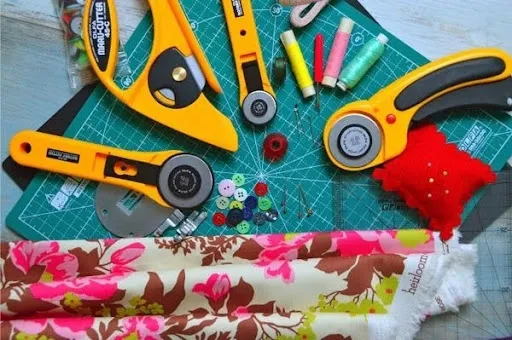
You need two contrasting quilting cottons (about a half yard each for a short runner), a backing piece, thin batting, and basic cutting tools.
- Rotary cutter and mat: clean edges on every square.
- Quilting ruler: a 6 x 12 inch acrylic ruler handles all the cuts.
- Pins and a quarter-inch presser foot: seam accuracy is the whole game.
- Cotton thread in a neutral: blends into both fabrics.
Fabric quality matters more than brand. A tightly woven cotton holds its shape through repeated handling and frays less at cut edges. A 2003 study on home laundering practices documented how washing shifts the dimensions of woven cotton, which is exactly why we prewash before cutting, never after.
For batting and backing, buy a piece two inches larger than your top on every side. Or skip the supply run - work with us to create custom table runners printed with any design, and we take the DIY effort out of the equation at competitive prices.
What Fabric And Batting Choices Create The Best Twisted Pole Effect?
High contrast creates the twist: pick one dark and one light fabric, or a bold print against a near-solid. If they blur together from a few steps back, the spiral disappears.
Quilting cotton is the easy call for the top - stable, pressable, and made for this. Linen blends look softer but shift while you cut, so we only suggest them once your seams are reliable.
| Batting choice | Loft | Heat protection | Suits |
|---|---|---|---|
| Cotton batting | Low, flat | Good | Everyday runners under dishes |
| Polyester batting | Higher, puffy | Moderate | Decorative runners |
| 80/20 cotton-poly blend | Low to medium | Good | All-purpose choice |
| Fusible fleece | Low, stiff | Light | Crisp, formal-looking runners |
| No batting, lined only | None | Minimal | Drapey, casual runners |
Keep the loft low for table runners - thin layers sit flat under plates. A 2020 study on polyester nonwoven materials found thickness and density largely determine how well a layer resists heat, so a runner meant to take warm serving dishes earns a denser batting. One honest caveat: no quilted runner replaces a trivet under genuinely hot cookware.
Want A Runner That Feels Handmade Without The Handwork?
Our custom embroidered table runners add stitched texture and your own design in any color, a thoughtful gift for hosts who love quilted decor.
Learn moreWhat Quilt Block Patterns Work Best For Twisted Pole Designs?
Blocks built from half square triangle pairs create the twist illusion, and the simplest versions alternate two triangle units with two solid squares in a four-patch arrangement. The layout, not the block, creates the effect.
Beginner-friendly options share three traits: large units (4 inch finished or bigger), two fabrics only, and a repeating two-row layout you can lay out on the floor before sewing.
Block sizing sets the finished runner. Three 6-inch blocks across give an 18-inch width before borders, while 4-inch blocks land near 12 inches. If you would rather skip piecing, our custom printed tablecloths can carry a twisted ribbon design with zero piecing.
What Is A Twisted Pole Quilt Block Pattern?
A twisted pole quilt block combines half square triangles and plain squares so the diagonal seams form a continuous zigzag when blocks sit side by side. Two offset rows make the two fabrics appear to pass over and under each other.
That sense of motion has a basis in how we see. Vision research on static geometric images finds that high-contrast repeating patterns can suggest movement in a still picture, and the pole twist plays on the same effect, your eye reading one continuous shape across separate blocks.
Customize it freely: rotate blocks for a steeper spiral, widen the solid squares for a looser one, or run two twists side by side on a wide runner.
Which Free Twisted Table Runner Patterns Are Best For Beginners?
The free patterns worth your time come from quilt guilds, fabric manufacturers, and established sewing blogs, and the beginner-friendly ones share a checklist: a complete cutting chart, a labeled layout diagram, pressing directions, and a stated finished size.
One widely shared free pole twist pattern finishes around 47 inches long by 19.5 inches wide, fitting a standard dining table as a centered topper, so you know up front whether to add or drop a block.
Downloadable PDF patterns beat video-only tutorials for first projects because you can check measurements on paper at the cutting table. Before you commit fabric, read the whole pattern once, then see our guide on how to make a table runner for sizing and material basics.
Where Can You Find A Free Pole Twist Table Runner Pattern?
Look first at fabric company blogs and quilting guild newsletters - both publish free pole twist and twisted ribbon patterns, and guild patterns tend to be member-tested. Quilting Facebook groups and forums recirculate them too.
Pattern marketplaces carry paid versions, typically a few dollars, and the money buys tested math, step photos, and support. Free patterns are a bargain, but we've seen more than one with a cutting chart error, so verify the block count against the stated finished size before cutting. If the numbers do not reconcile, trust the math, not the diagram.
Setting A Christmas Table For The Whole Family?
Our custom Christmas tablecloths pair beautifully under a quilted runner, printed in your colors with sizes for 4, 6, and 8 foot tables.
How Can You Use Twisted Ribbon And Christmas Table Runner Variations?
The same block layout adapts into ribbon-inspired variations by softening the contrast or adding a third fabric. Use a background plus two ribbon fabrics and the twist reads as a ribbon laid across the table rather than a pole wrapped in stripes.
Seasonal combinations do the theming for you:
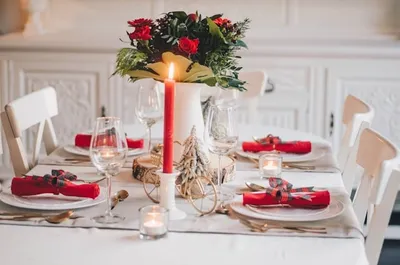
- Christmas: red and green on a cream background, or red and white alone.
- Fall: rust and gold with a tan background.
- Spring and Easter: soft pastels against white.
- Everyday: navy and gray, which survives every season.
Color placement changes the look - swap which fabric sits in the dominant diagonal and the twist appears to reverse direction. For the table underneath, work with us to create custom Christmas tablecloths in colors matched to your runner, at competitive prices in any size.
What Is A Twisted Ribbon Table Runner Pattern?
A twisted ribbon table runner pattern is the softer cousin of the pole twist. It uses the same half square triangle engine, but the ribbon version typically sets two prints against a light background so the shape reads as a folded ribbon with visible front and back faces.
The practical difference is fabric count: pole twists need two fabrics, ribbon versions usually want three. Choose the ribbon variation when you have a feature print you love, since the background frames it. Tone-on-tone prints, small florals, and metallics all carry the illusion well, with the same straight seams.
Need Matching Table Decor For An Event Or Craft Fair?
Our custom printed tablecloths use dye sublimation for crisp, full-color designs, with no minimum order and generous bulk discounts on larger table counts.
Get startedWhy Are Christmas Twisted Pole Table Runner Designs So Popular?
Christmas versions dominate because the twist looks like wrapped ribbon and candy stripes, two images already wired into holiday decor. Red, green, white, and gold schemes map perfectly onto a two-fabric pattern.
Holiday-themed layouts forgive busier prints - a holy print that would overwhelm an everyday runner looks right at home in December. It coordinates with what most homes already own: white dishes, greenery, and candles.
We see holiday color requests climb every fall in the table decor we print, so if you are sewing one as a gift, start it in October, not the week of the party. Take this quick quiz to find your fastest route to the finished table:
What Makes A Candy Cane Twisted Pole Table Runner Perfect For Christmas?
The candy cane version works because the pole twist in red and white is literally the candy cane stripe, flattened onto a table. No other colorway communicates the holiday with two fabrics and zero applique.
Build it with a true red and a crisp white, not cream - the sharper the contrast, the more the stripes pop against greenery. Quilt it with simple straight lines along the diagonals so the texture follows the twist.
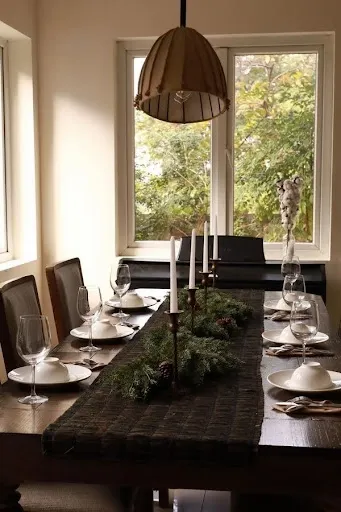
Style the table around it sparingly: white dishes, a green garland down the center, glass candle holders. The runner carries the look, so keep everything else simple.
What Size Should A Quilted Table Runner Be?
Standard quilted runners measure 12 to 18 inches wide, with length set by your table and how much drop you want. A runner wider than a third of the tabletop starts crowding place settings.
| Table length | Topper style (no drop) | With 6-12 inch drop per end |
|---|---|---|
| 48 inches | 36-48 inches | 60-72 inches |
| 60 inches | 48-60 inches | 72-84 inches |
| 72 inches | 60-72 inches | 84-96 inches |
| 96 inches | 72-96 inches | 108-120 inches |
Decorative runners can run shorter and sit centered as a topper, while functional runners that protect the table should span the full serving zone. Decide which job yours has before you cut, and check our table runner size chart guide when your table falls between sizes.
How Long Should A Runner Be For A 72 Inch Table?
For a 72-inch table, cut or buy a runner 84 to 96 inches long if you want the traditional 6 to 12 inch drop on each end. Formal settings lean toward the longer drop; casual tables look fine at 6 inches.
Prefer a modern look? A 60-inch topper centered on the table skips the drop entirely and keeps the ends clear for seating. In our experience, the topper length is the safer call when chairs sit at the table ends, since a draped end catches on chairs and arms.
Leave 14 to 18 inches of bare runner at the center for your centerpiece so candles and dishes sit on fabric, not on seam ridges. Measure your table before choosing a pattern, and let the function set the size.
Frequently Asked Questions About Twisted Pole Table Runner Pattern
What Is A Twisted Pole Table Runner Pattern?
It is a quilt pattern that arranges half square triangles and plain squares so two contrasting fabrics appear to twist around each other like ribbon on a pole, using only straight seams.
How Do You Sew A Twisted Pole Table Runner?
Cut squares from two fabrics, sew them into half square triangles, arrange two offset rows so the diagonals connect, join the rows, then layer, quilt, and bind. Most beginners finish in a weekend.